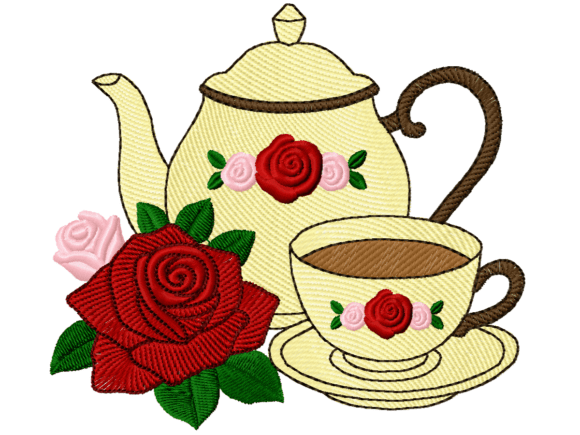
Floral Teapot and Teacup with Roses
As someone who’s stitched hundreds of designs across apparel, home goods, and boutique merchandise—and advised dozens of Etsy sellers and craft businesses—I opened Floral Teapot and Teacup with Roses expecting charm. What I found was something more useful: a design that balances whimsy with wearability. It doesn’t shout. It invites. And that makes all the difference when you’re choosing embroidery for real products—not just digital previews.
A Design That Fits Before It’s Stitched
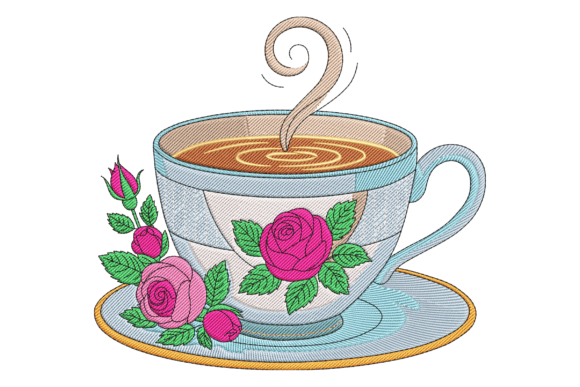
The first thing that stands out is its gentle rhythm: the teapot anchors the composition, while the teacup nestles beside it like a quiet companion. Roses curl around both—not tightly packed, but breathing, with soft petal shapes that suggest movement rather than rigidity. This isn’t a stiff vintage motif or an over-engineered floral explosion. It’s relaxed, warm, and quietly confident—ideal for handmade products where authenticity matters more than flash.
I tested Floral Teapot and Teacup with Roses on a natural linen tea towel first—no embellishment, no extra stitching, just clean fabric and thread. The result felt intentional, not decorative. Customers don’t buy “a teapot”; they buy the feeling of slow mornings, thoughtful gifting, or a kitchen that feels like home. This design delivers that tone without needing explanation.
Where It Shines (and Where It Asks for Care)
Floral Teapot and Teacup with Roses works beautifully on medium-weight fabrics with stable weaves: cotton twill aprons, brushed cotton sweatshirts, structured tote bags, and woven tea towels. On those surfaces, the satin stitch outlines hold crispness, and the fill stitches settle evenly—no puffing, no distortion. I used it on a cream-colored canvas tote for a local café’s gift set, and customers immediately commented on how “hand-drawn” and “unforced” it looked—even though it’s a machine embroidery design.
It also translates well to baby items: a onesie or burp cloth gains instant personality without overwhelming the scale. The roses are detailed enough to read at 3–4 inches wide, but not so dense that they feel heavy on delicate cotton. For holiday embroidery or wedding gifts—think monogrammed pillow covers or linen napkins—the design reads as elevated but never fussy.
That said, it needs thoughtful placement on certain substrates. On thin or highly stretchy fabric—like lightweight jersey t-shirts or ribbed baby caps—the curves of the teapot handle and cup rim can blur if stabilizer isn’t layered precisely. I recommend a light cutaway + tear-away combo for anything with give. And on dark fabric? Test thread colors carefully. Some rose shades lose definition in low-contrast pairings—especially in smaller hoop sizes where stitch density tightens naturally.
What It Adds to Your Craft Business
If you’re an Etsy seller or small shop owner, Floral Teapot and Teacup with Roses strengthens your brand voice—not just visually, but emotionally. It signals care, warmth, and attention to daily rituals. That builds trust faster than generic florals or overused script fonts. When paired with simple typography or a subtle border, it becomes part of a cohesive collection: think matching tea towels, aprons, and ceramic mugs with coordinated labels.
For personalized gifts, it scales gracefully. Add a name or date in a clean sans-serif running stitch below the design, and you’ve got a meaningful custom apparel piece—no redesign needed. As a digital embroidery file, it’s versatile enough for printable mockups (great for social media listings) and commercial embroidery projects alike—just confirm licensing before bundling it into kits or selling finished embroidered patches.
Real-World Notes from My Hoop
- Always test on scrap fabric first—especially if you’re using textured weaves like waffle-knit towels or bouclé blends. The roses’ curves respond differently depending on surface grip.
- Check stitch density in the rose centers. Too much fill can flatten dimension; too little leaves gaps. A quick zoom-in on your embroidery software helps spot potential weak points.
- Hoop size matters. This design lives comfortably in a 5x7" hoop—but if you’re scaling down for a cap front or baby onesie, verify clarity in the teacup saucer and stem details before committing.
- Try black-and-white mockups. If the design holds visual weight without color, it’ll translate better across fabric types and lighting conditions—key for online shops.
- Use proper stabilizer—not just “some.” Medium-weight cutaway prevents puckering on structured items; lightweight tear-away keeps baby embroidery soft.
- Review thread color contrast on both light and dark backgrounds. Some rose tones work beautifully on oatmeal linen but fade on navy denim unless adjusted.
- Confirm commercial use rights. Since this is marketed for t-shirts, towels, and home decor, double-check whether resale of finished products is permitted—especially if you plan to list it as part of a craft business bundle.
Final Thought: A Quiet Workhorse, Not a Showstopper
Floral Teapot and Teacup with Roses won’t dominate a trade show booth. It won’t go viral for its shock value. But it will sell—consistently—on a handmade pillow cover, a boutique apron, or a curated holiday gift box. It earns its place because it supports the product instead of competing with it. That’s rare. And for designers, sellers, and makers building real businesses—not just one-off projects—it’s exactly the kind of embroidery file that pays dividends in repeat customers, thoughtful reviews, and quiet confidence in every stitch.
If your next project leans into comfort, ritual, or gentle celebration—whether it’s a small shop’s summer collection or a personalized gift for someone who savors still moments—Floral Teapot and Teacup with Roses belongs in your working library. Just remember: let the fabric breathe, honor the detail, and stitch it like it matters. Because for your customers, it does.