Rose Butterfly Embroidery Design
A Whimsical Yet Refined Statement for Boutique Apparel
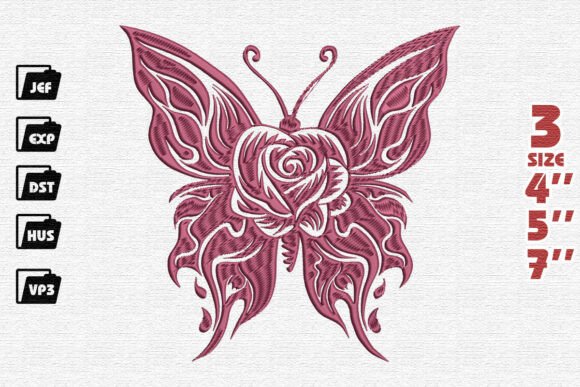
As an embroidery designer who’s developed collections for small clothing brands and Etsy sellers for over a decade, I opened the Rose Butterfly Embroidery Design with immediate curiosity—and stayed engaged through every stitch preview. This isn’t just another bug-themed motif. It’s a fantasy hybrid: delicate rose petals forming wings, a softly rounded butterfly body blooming like a heart-shaped bud, and subtle curving vines that suggest growth rather than rigidity. The visual personality is enchanted romance—feminine without being saccharine, detailed without feeling fussy, and quietly confident in its storytelling. It leans elegant and timeless, not trendy or disposable. That makes it ideal for boutique brands building cohesive seasonal lines—not one-off novelty items.
How It Performs Across Real Apparel Projects
I tested the Rose Butterfly Embroidery Design across six garment types I regularly use for client collections: neutral heather sweatshirts, soft pastel hoodies, charcoal crewnecks, oversized terry-cotton hoodies, lightweight denim jackets, and heavyweight cotton tote bags. On all of them, the design held its expressive integrity—but with meaningful nuance.
- Sweatshirt embroidery: Placed on the left chest of a medium-gray French terry sweatshirt, the rose butterfly read clearly at 3.5" wide. Its balanced proportions avoided visual heaviness, and the petal layering created gentle texture against the fabric’s looped surface.
- Hoodie design: Centered on the upper back of a blush hoodie (just below the collar seam), it became a quiet focal point—elegant enough for lifestyle photography but still approachable for teen and adult audiences.
- Sleeve accents & back designs: At 2.75", it worked beautifully on the lower sleeve cuff of a black oversized hoodie—subtle, intentional, and highly shareable on Instagram Reels.
- T-shirt embroidery: On a fitted organic cotton tee, I used light tear-away stabilizer and matched thread tones to the rose’s blush center and deep green vine. The result felt handmade but polished—ideal for small shop product listings where perceived quality drives conversion.
- Tote bag design: Hooped and stitched on natural canvas, the design retained definition even across the bag’s slightly uneven weave. Its moderate stitch density prevented puckering—a common pitfall with overly dense Creative Fabrica embroidery files.
Where to Use It Thoughtfully
The Rose Butterfly Embroidery Design shines brightest when placed intentionally—not everywhere. Avoid cramming it into tiny chest placements under 2.5", especially on ribbed knit fabrics where stitch definition can blur. On stretchy fabrics like fleece-backed hoodies, always test with cutaway stabilizer to support the wing edges and prevent distortion during wear. Curved surfaces—like the front yoke of a raglan sleeve or the rounded shoulder of a denim jacket—require careful hooping and possibly slight digitizing tweaks (if you have editing access) to maintain symmetry.
Dark garments demand attention to thread color contrast. While the design’s natural palette suggests rose pinks and sage greens, switching to ivory or gold metallic thread on navy or charcoal creates unexpected sophistication—perfect for holiday or gifting collections. And because the butterfly’s body includes fine inner details (veins, petal gradients), avoid pairing it with ultra-bulky threads or low-stitch-count machines unless you’ve verified compatibility in the Creative Fabrica embroidery file notes.
Why It Elevates Brand Identity & Customer Trust
In my experience, buyers don’t just purchase embroidered apparel—they invest in mood, intention, and perceived care. The Rose Butterfly Embroidery Design signals craftsmanship before the first stitch hits fabric. Its cohesive flow and botanical precision tell customers your brand values narrative detail, not just decoration. For Etsy sellers and handmade product creators, that translates directly to higher average order value and repeat engagement. When styled consistently across sweatshirts, totes, and denim jackets, it becomes a recognizable signature—like a subtle logo alternative for brands avoiding overt branding.
It also supports strong visual consistency in printable mockups and social media graphics. Because the shape is inherently balanced and centered, it scales cleanly from thumbnail previews to full-screen carousel posts. No awkward cropping, no lost detail—just reliable, emotive presence.
Practical Designer Notes Before You Stitch
Before adding the Rose Butterfly Embroidery Design to your next collection, do these five things:
- Test on scrap fabric that matches your final garment’s weight, stretch, and texture—not just generic cotton.
- Review stabilizer choice: Light cutaway for knits, tear-away for stable wovens, and fusible + tear-away for lightweight denims.
- Confirm hoop size—some versions may include multiple sizes; choose based on your target placement and garment type.
- Inspect stitch density in your embroidery software. If areas feel overly packed (especially near petal tips), consider reducing density by 5–8% for softer drape on apparel.
- Check Creative Fabrica product details thoroughly: licensing terms for commercial embroidery, included file formats, and any notes about thread color suggestions or recommended underlay.
Remember: even beautiful digital embroidery files need real-world calibration. What reads as “romantic” on screen must translate to tactile comfort and lasting wear. The Rose Butterfly Embroidery Design gives you strong raw material—but your judgment, testing, and attention to fabric behavior make it truly boutique-worthy.
Final Thought for Small Shop Creators
If you’re building a curated line of custom apparel—whether for local markets, Etsy, or direct-to-consumer webshops—the Rose Butterfly Embroidery Design isn’t just another machine embroidery design. It’s a versatile, emotionally resonant asset. It fits naturally within the Bugs category yet transcends it, offering depth where many floral or insect motifs stay literal. Used with intention, it helps your small shop product stand apart—not with loudness, but with quiet, confident charm.