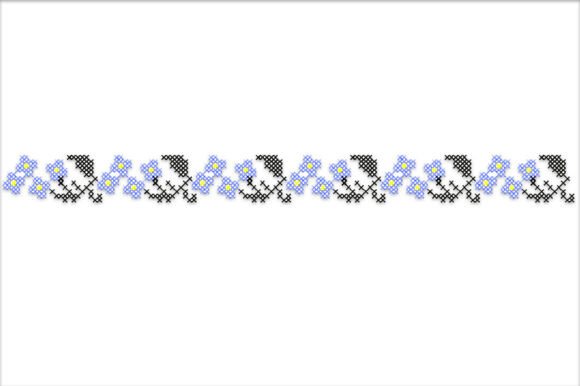
Flowers Border Cross Stitch Pattern
A Quietly Confident Border That Feels Like Home
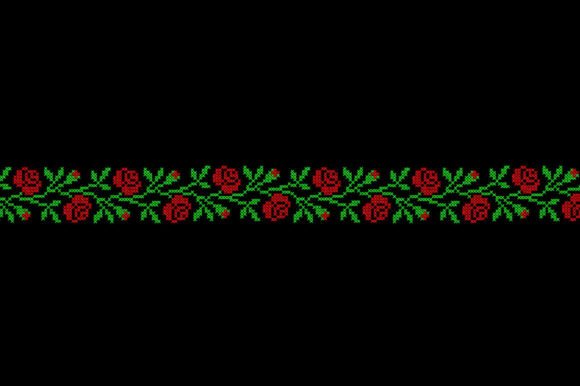
First impression? This isn’t a shout—it’s a soft, intentional exhale. The Flowers Border Cross Stitch Pattern carries the quiet dignity of Ukrainian folk motifs—layered petals, rhythmic stems, and subtle asymmetry—but edited with contemporary restraint. It doesn’t crowd the frame; it frames *you*. The repeat is generous but not overwhelming, and the floral rhythm feels organic, not algorithmic. That matters when you’re stitching something meant to be held, worn, or gifted—not just scrolled past.
Where It Lives Best: Real Projects, Not Just Pixels
I recently prepped a limited-run batch of linen tea towels for a local kitchen boutique—and reached straight for the Flowers Border Cross Stitch Pattern. Why? Because borders like this don’t compete with function; they elevate it. Stitched along the hem in DMC 310 (a warm, grounded taupe), it gave each towel a handmade signature without sacrificing utility. Customers noticed—not because it was flashy, but because it felt *considered*.
It works equally well on:
- Custom apparel: Think sweatshirt cuffs or collar edges—especially on midweight cotton or French terry where stitch definition holds.
- Baby embroidery: A gentle border around the neckline of a cotton kimono or the corner of a muslin swaddle adds heirloom warmth without visual noise.
- Embroidered patch: Sized down to 2.5" wide, it reads clearly as a standalone motif—ideal for iron-on or sew-on patches on denim jackets or tote bags.
- Holiday embroidery: Paired with minimalist red or forest green thread, it softens seasonal pieces—think napkin hems, pillow covers, or linen gift wrap accents.
- Etsy seller assets: As a digital embroidery file, it’s versatile enough to bundle with “Stitch-Your-Own-Tea-Towel” kits or pair with coordinating floral motifs in a themed design pack.
Where to Pause—and Test First
This isn’t a one-size-fits-all border. Its charm lies in its texture and flow—and those same qualities demand attention in certain contexts:
- Small hoop sizes: Below 4" width, some petal details may compress or lose clarity. Always check how the repeat anchors at the corners.
- Textured or stretchy fabric: On slubbed linen or lightweight knits, the pattern’s gentle curves can blur if stabilizer isn’t matched thoughtfully. A medium-weight cutaway + tear-away combo usually keeps stems crisp.
- Dark fabric: The design relies on shape and rhythm more than high-contrast line work. On navy or charcoal, use matte thread (not metallic or rayon) and consider slightly heavier weight (e.g., #8 perle cotton for hand-stitching) to maintain presence.
- Curved surfaces: Caps or curved pillow edges require careful placement—avoid forcing the repeat across seams or crowns. It shines best on flat, stable zones: tote bag flaps, apron pockets, or towel hems.
- Frequent-wash items: While cross-stitch holds up beautifully, dense fill areas (like layered flower centers) benefit from secure backstitch anchoring—especially for baby embroidery or kitchen towels.
What It Adds—Beyond Thread and Fabric
The Flowers Border Cross Stitch Pattern quietly raises the perceived value of any finished product. It signals care—not just in execution, but in curation. When customers see this border on a personalized gift or small shop product, they don’t just register “embroidery.” They register *intention*: that someone chose a motif with history, scaled it thoughtfully, and stitched it with respect for both craft and context.
For Etsy sellers and craft business owners, that translates to stronger buyer engagement and repeat trust. It’s distinctive enough to stand out in a crowded feed—but timeless enough to avoid feeling dated by next season. And because it leans into tradition without leaning on cliché, it supports brand consistency whether you're selling modern nursery decor or elevated kitchen goods.
Designer Notes You’ll Actually Use
Before committing to production—or listing it as part of your digital embroidery file collection—here’s what I do every time:
- Test on scrap fabric that matches your final substrate—same weight, same weave, same dye lot if possible.
- Check thread color contrast in natural light *and* under warm indoor lighting. What reads softly in daylight may vanish near a kitchen lamp.
- Review stitch density visually—not just in software. Dense sections should breathe; open areas should feel deliberate, not sparse.
- Confirm hoop size compatibility for your intended application. If you plan to offer it as a machine embroidery design, note whether the repeat fits cleanly within standard 4x4 or 5x7 hoops—or requires repositioning.
- Inspect small details at actual stitch scale: are stem tips sharp? Do petal edges taper naturally? Fuzzy corners undermine professionalism fast.
- Test black-and-white mockups. If it loses its voice without color, reconsider thread palette or placement.
- Compare light and dark backgrounds side-by-side—even if you only plan to use it on ivory, seeing it on charcoal reveals hidden clarity issues.
- Use proper stabilizer—no shortcuts. This pattern’s elegance depends on stability, not stiffness.
- Verify licensing before selling finished products or bundling it into commercial design assets. Since it draws from Ukrainian traditional aesthetics, respectful attribution and usage rights matter—both ethically and legally.
Final Thought: A Border With Belonging
The Flowers Border Cross Stitch Pattern doesn’t try to be everything. It’s not a statement monogram or a bold applique design. It’s the quiet confidence of a well-placed hem, the warmth of a familiar motif reinterpreted with honesty—not nostalgia. Whether you’re stitching a single custom apron or scaling it across a boutique’s seasonal line, it brings cohesion, calm, and craft-forward credibility. That’s rare. And worth stitching slowly.