Spring Lily of the Valley Flowers
A Refined Floral Touch for Small Business Branding
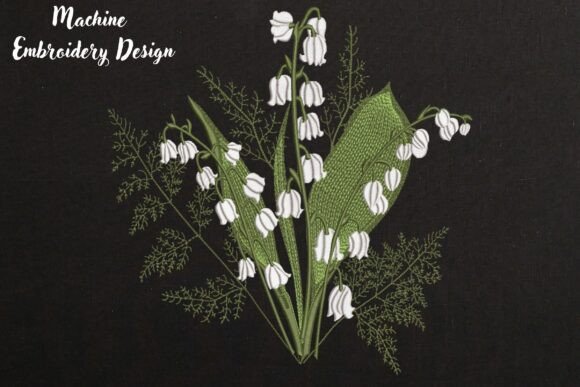
As an embroidery designer who’s developed and digitized hundreds of designs for small business merch, my first impression of Spring Lily of the Valley Flowers is immediate: it reads as elegant, gentle, and quietly confident—not fussy, not fragile, but thoughtfully composed. The description—“a delicate cluster of lily of the valley flowers with fine foliage details” and “tiny white bells and soft green leaves”—signals a design rooted in botanical authenticity and refined execution. That matters. For cafés, florists, boutiques, bakeries, pet brands, and creative studios, this isn’t just a floral motif; it’s a brand whisperer. It conveys care, attention to detail, and natural sophistication—qualities that build customer trust without shouting.
Where Spring Lily of the Valley Flowers Shines in Real Business Use
This machine embroidery design excels where subtlety meets intention. On staff aprons? Perfect—it adds artisanal warmth without overwhelming function. As a chest logo on custom apparel for a local bakery or herbal apothecary? Yes: its soft scale and organic flow complement handmade product storytelling. As an embroidered patch sewn onto tote bags for a boutique launch or farmer’s market pop-up? Absolutely. The cluster composition holds visual weight at 2.5–3.5 inches wide, making it ideal for sleeve accents, cap backs, or interior garment labels.
For Etsy sellers and crafters, Spring Lily of the Valley Flowers works beautifully in printable mockups—its clean lines and balanced negative space translate crisply across digital previews. As part of a broader set of design assets, it pairs well with minimalist typography or monogrammed initials, reinforcing visual consistency across packaging, tags, and social media graphics. And because it leans into classic floral elegance rather than trend-driven whimsy, it supports long-term brand identity—not seasonal novelty.
Smart Placement Considerations for Commercial Embroidery
While graceful, Spring Lily of the Valley Flowers demands thoughtful placement. Its fine foliage details and tiny bell shapes mean it should be used cautiously on curved surfaces like cap fronts unless digitized with strategic underlay and reduced density. On dark uniforms or textured fabrics (like heavy canvas totes or linen aprons), contrast becomes critical—test thread colors thoroughly: matte ecru or heathered sage may read better than stark white on charcoal twill.
Avoid shrinking it below 1.75 inches wide without verifying stitch integrity—those delicate bells can collapse or blur at ultra-small sizes. Likewise, high stitch density in tight clusters may cause puckering on lightweight knits or stretch fabrics unless paired with appropriate cutaway or tear-away stabilizer. Always confirm hoop size compatibility before batching production; some versions of this design may require a 4×4 hoop minimum, while others may scale cleanly to 5×7 for larger tote bag applications.
How This Design Strengthens Your Brand Identity
In small business merch, every stitch communicates value. Spring Lily of the Valley Flowers elevates perceived quality—not through flash, but through finesse. When customers see it stitched precisely on a café apron or boutique gift tag, they register craftsmanship. That builds recognition over time: repeat patrons begin associating those soft green leaves and bell-shaped blooms with your brand’s ethos—calm, intentional, human-scaled.
It also supports versatility across touchpoints. Use it alone as a standalone embroidered patch for customer thank-you gifts, or layer it beside your wordmark on product packaging. Because it avoids cliché (no hearts, no generic roses), it feels distinctive—not generic stock art. That distinction matters for Etsy sellers competing in saturated categories and for local businesses aiming to stand out in community markets.
Practical Embroidery Designer Notes Before You Stitch
Before committing to bulk production, follow these field-tested steps:
- Test in black and white first—verify clarity of bell outlines and leaf separation without color distraction.
- Check small-patch viability: resize to your target patch dimensions (e.g., 2” round or 1.5” x 2.5” rectangle) and inspect stitch definition on screen and in simulation software.
- Review thread color contrast on your actual fabric swatches—not just on-screen previews.
- Inspect spacing between elements: tight foliage shouldn’t merge into solid fill at standard densities.
- Confirm hoop size and format compatibility with your embroidery machines and software—especially if ordering a digital embroidery file from a third-party source.
- Test on real fabric with your intended stabilizer combo—lightweight fusible + medium tear-away often balances drape and stability for this design’s detail level.
- Create a client-approved printable mockup before stitching live samples—this prevents costly rework and aligns expectations early.
- Compare it beside your other design assets: does it harmonize tonally and proportionally with logos, icons, or secondary patterns?
- Verify commercial licensing—if using for resale items (e.g., branded totes sold online), ensure the embroidery file permits commercial embroidery use. Never assume.
Final Thought: More Than a Floral Design—A Brand Ally
Spring Lily of the Valley Flowers is more than a pretty machine embroidery design. In the hands of a small business owner or embroidery shop, it’s a quiet amplifier—enhancing professionalism on staff uniforms, deepening emotional connection on customer-facing merchandise, and reinforcing handmade authenticity without sacrificing polish. Whether you’re launching a new line of botanical skincare, branding a neighborhood florist, or designing limited-run patches for a creative studio event, this design delivers timeless resonance. Just remember: elegance thrives on intention. Test it, tune it, and let its delicate strength speak for your brand—stitch by thoughtful stitch.